العربية

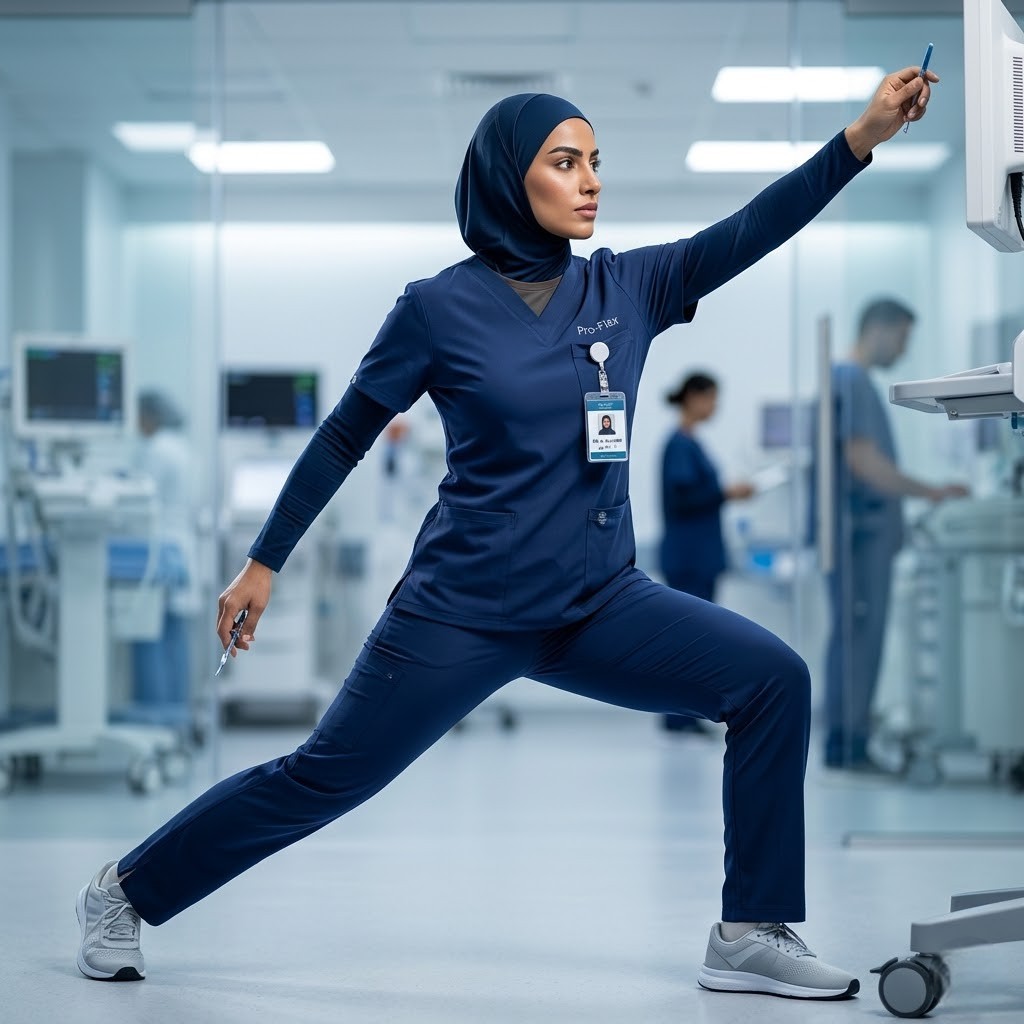
Selecting the perfect professional medical attire goes far beyond choosing an appealing color or a preferred neckline; it is fundamentally about the science and performance of the fabric that envelops you during your most challenging shifts. Since our establishment in 2001, we have dedicated ourselves to mastering the art of medical garment manufacturing, bringing decades of Egyptian craftsmanship and luxury to our new clientele in Riyadh. Healthcare professionals in Saudi Arabia operate in high-pressure, fast-paced environments where the climate demands exceptional breathability, while the nature of the work requires unparalleled flexibility and durability. Your uniform is your daily armor, and the materials it is constructed from directly impact your stamina, comfort, and professional image. In the ongoing debate between classic materials and modern innovations, understanding the precise differences between spandex scrubs and cotton scrubs is crucial. This comprehensive guide will dissect the unique properties of both fabrics, evaluating their stretch, softness, maintenance requirements, and overall suitability for rigorous daily wear, ensuring you make an informed investment in your clinical wardrobe.
What Makes Cotton Scrubs a Traditional Favorite?
For generations, pure cotton has been the undisputed standard in medical apparel. Its deep-rooted history in the healthcare industry is entirely justified by its natural properties, which cater beautifully to the basic needs of doctors, nurses, and technicians.
Cotton is a naturally occurring fiber harvested from the cotton plant, making it inherently soft, hypoallergenic, and non-irritating to sensitive skin. When you wear a garment like the White Classic Scrub, the immediate sensation is one of structured comfort. The natural weave of cotton allows for excellent air circulation, which was historically the primary method for keeping medical professionals cool under the intense lights of operating rooms or during long ward rounds.
Furthermore, traditional cotton possesses a crisp, authoritative drape. When properly pressed, cotton garments project a highly traditional, immaculate appearance that conveys a sense of established trust and clinical hygiene to patients. The fabric’s ability to withstand high-temperature washing also made it a favorite in an era before advanced chemical sanitizers, as it could be boiled without immediately destroying the garment’s structural integrity.
What Are the Drawbacks of Pure Cotton in Daily Wear?
Despite its historical dominance and undeniable softness, 100% cotton presents several significant challenges for the modern healthcare worker, particularly those enduring demanding twelve-hour shifts.
- Zero Inherent Stretch: Pure cotton fibers do not stretch. When you bend to lift a patient or reach for overhead equipment, the fabric resists your movement. This lack of elasticity can cause the uniform to feel restrictive across the shoulders and thighs, leading to physical fatigue over time.
- High Wrinkle Propensity: Cotton is notorious for wrinkling. Even if you start your shift with a perfectly ironed uniform, an hour of sitting at a charting station will leave the fabric heavily creased, diminishing your polished appearance.
- Moisture Retention: While cotton is breathable, it is also highly absorbent. Instead of wicking sweat away from the body, pure cotton absorbs moisture and holds it against your skin. In the warm climate of Riyadh, a cotton uniform can quickly become damp, heavy, and uncomfortable during emergency situations.
- Shrinkage and Color Fading: Traditional cotton is highly susceptible to shrinking when exposed to hot water and high-heat commercial dryers. Additionally, cotton fibers release dye more easily than synthetics, leading to a faded, worn-out appearance after repeated laundering cycles.
Why Are Spandex Scrubs Revolutionizing Medical Apparel?
The introduction of synthetic stretch fibers, primarily spandex (also known as elastane or Lycra), has fundamentally transformed the landscape of medical uniforms. Spandex is never used entirely on its own; rather, it is strategically blended with other fibers like polyester, rayon, or even cotton to inject crucial elasticity into the garment.
Spandex scrubs are engineered for the realities of modern medicine. By incorporating just a small percentage of elastane into the fabric weave—typically between 2% and 5%—manufacturers create a garment that drastically outperforms traditional materials in terms of mobility and resilience. This technological advancement means that your uniform moves symmetrically with your body, offering a modern, tailored fit without ever feeling tight or constricting. For professionals who require constant, unhindered movement, exploring our comprehensive Shop reveals the diverse possibilities of these advanced synthetic blends.
How Does Stretch Scrub Fabric Enhance Your Daily Shift?
The term “stretch” in medical apparel is often categorized into two types: two-way stretch and 4-way stretch. Understanding this distinction is key to maximizing your comfort in the clinic or hospital.
The Superiority of 4-Way Stretch
Two-way stretch fabric only stretches in one direction (usually horizontally across the body). While this is an upgrade from rigid cotton, it still limits vertical mobility. Conversely, 4-way stretch scrub fabric expands both horizontally and vertically, conforming perfectly to your body’s biomechanics.
- Unrestricted Range of Motion: Whether you are performing a complex surgical procedure, transferring a patient from a gurney to a bed, or sprinting down a hallway, the fabric expands and recovers instantly, eliminating any tugging or pulling at the seams.
- Sustained Energy Levels: When your clothing does not fight against your movements, you expend less physical energy throughout the day. This subtle reduction in physical friction significantly delays the onset of physical exhaustion.
- Enhanced Durability: Because the fabric stretches rather than pulling taut against the stitching, the seams undergo far less stress. This drastically reduces the likelihood of blowouts or tears in high-stress areas like the crotch or underarms.
Product Highlight: The Pinnacle of Stretch and Style
Discover the pinnacle of professional elegance with our premium medical garments designed specifically for the modern healthcare environment. This meticulously crafted attire combines exceptional softness with a tailored fit that flatters your silhouette while maintaining absolute clinical functionality. The luxurious drape of the fabric ensures you project an image of unwavering authority and competence during every patient interaction.
Engineered with advanced fabric technology, this garment provides unparalleled four-way stretch that effortlessly accommodates the dynamic movements of your demanding shifts. The resilient material naturally resists fading and wrinkling, allowing you to maintain a pristine, polished appearance from your first consultation to your final round. Elevate your daily medical wardrobe by experiencing the superior craftsmanship and comfort of the sophisticated Black Royal Scrub.
The Power of the Blend: Why Combine Spandex and Polyester?
In the luxury tier of medical apparel, you will frequently find spandex blended with high-grade polyester. This specific combination is widely considered the ultimate formula for modern healthcare professionals.
Polyester provides incredible tensile strength, deep color retention, and moisture-wicking properties, while spandex delivers the necessary flexibility. Together, they create a uniform that is virtually indestructible yet feels as comfortable as premium athletic wear. When you don a garment like the Blue Classic Scrub Top, you are experiencing the direct benefits of this advanced textile engineering. The fabric pulls sweat away from your skin, disperses it across the surface of the garment for rapid evaporation, and stretches seamlessly as you navigate your busy department.
Spandex vs. Cotton: Which Fabric Wins for Breathability?
Breathability is a critical factor, especially when working in the warm, demanding climate of Saudi Arabia. The mechanism of breathability differs significantly between the two materials.
Pure cotton is naturally breathable because the physical structure of the woven plant fibers allows air to pass through easily. It feels cool to the touch upon initial wear. However, as mentioned earlier, its inability to wick moisture means that once you begin to perspire, the breathability plummets, and the garment becomes an insulating, damp layer.
Modern spandex and polyester blends approach breathability through advanced structural engineering. While synthetic fibers are not naturally porous like cotton, premium medical wear utilizes proprietary weaving techniques that create micro-ventilation channels within the fabric. Furthermore, these synthetic blends excel at moisture management. By actively drawing sweat away from the body and drying in a fraction of the time it takes cotton, premium stretch fabrics maintain a consistent, cool microclimate against your skin throughout a twelve-hour shift.
How Do These Fabrics Compare in Wrinkle-Free Maintenance?
For a professional who values luxury and elegance, appearance is everything. Arriving at the hospital looking rumpled and disheveled is simply not an option.
- The Cotton Struggle: Maintaining a crisp cotton uniform is a labor-intensive process. It requires prompt removal from the dryer, meticulous ironing, and often the application of starch to maintain its shape. Even with this effort, a pure cotton uniform will inevitably develop deep creases simply from sitting or bending during the workday.
- The Spandex/Synthetic Advantage: This is where modern blends truly shine. Spandex scrubs are inherently wrinkle-free. The elasticity that allows the garment to stretch also allows the fibers to snap back into their original, smooth configuration. Items like the Crimson Royal Polyester Scrub Pants can often be washed, tumble dried on low, and worn immediately without a single touch from an iron, saving you precious hours of preparation time each week.
Fabric Comparison: Spandex Blends vs. Pure Cotton
To assist you in making the best decision for your specific clinical needs, below is a direct comparison of the key performance metrics of both fabric profiles.
| Performance Feature | 100% Cotton Scrubs | Spandex / Polyester Blends |
| Stretch & Mobility | Very Low (Rigid) | Extremely High (4-Way Stretch) |
| Breathability Method | Natural air circulation | Engineered moisture-wicking |
| Wrinkle Resistance | Poor (Requires heavy ironing) | Excellent (Wrinkle-free, wash-and-wear) |
| Softness & Feel | Traditional, structured softness | Silky, athletic, and smooth |
| Color Retention | Fades gradually over time | Vibrant, fade-resistant for years |
| Moisture Management | Absorbs and retains sweat | Wicks sweat and dries rapidly |
| Durability | Prone to shrinking and tearing | Highly resistant to shrinking and abrasion |
How to Choose the Right Fabric for Your Specialty?
Your specific role within the healthcare ecosystem should dictate your fabric choice. Not all medical professionals face the same physical demands, and tailoring your uniform to your specialty ensures optimal performance.
For Surgeons and Emergency Room Staff
If you operate in high-adrenaline environments that require rapid movement, heavy lifting, and long hours on your feet, flexibility is non-negotiable. You need uniforms equipped with advanced 4-way stretch scrub fabric that will not tear or restrict you during critical, life-saving maneuvers. The moisture-wicking properties of spandex blends are also vital under hot surgical lights.
For Pediatricians and General Practitioners
Professionals who spend their days transitioning between consultation rooms, playing with pediatric patients on the floor, and sitting at desks for charting need a balance of approachability and comfort. A uniform like the Dark Steel Blue Classic Scrub provides a soft, non-intimidating aesthetic while still offering the stretch required to bend and move comfortably throughout the clinic.
For Dental Professionals and Hygienists
Dentists and hygienists spend the majority of their day seated but constantly reaching, leaning, and twisting their torsos. A rigid cotton top will quickly chafe the neck and restrict the shoulders. Spandex blends provide the exact horizontal and vertical elasticity required to maintain ergonomic posture while leaning over patients, preventing long-term back and shoulder fatigue.
Step-by-Step Guide to Caring for Stretch Scrub Fabric
To protect your investment and ensure your luxury medical apparel maintains its vibrant color and elasticity for years to come, you must adopt proper laundering techniques. Elastane is a delicate fiber that can be degraded by extreme heat and harsh chemicals.
- Turn Garments Inside Out: Before washing, turn your tops and pants inside out. This protects the outer surface from friction in the washing machine, preventing pilling and preserving the smooth, professional finish.
- Use Cold or Warm Water: Avoid boiling hot water. While high heat is sometimes necessary for heavy sanitation, routine washing should be done in cold or lukewarm water to prevent the elastane fibers from melting or losing their snap-back memory.
- Choose a Gentle Detergent: Utilize mild, liquid detergents. Avoid harsh powder detergents or anything containing heavy chlorine bleach, as bleach will actively eat away at spandex fibers, causing the garment to become brittle and lose its stretch.
- Skip the Fabric Softener: Liquid fabric softeners leave a waxy coating on synthetic fibers. This coating destroys the fabric’s ability to wick moisture away from your body, trapping heat and sweat against your skin.
- Tumble Dry on Low or Air Dry: The intense heat of a commercial dryer is the enemy of spandex. Tumble dry your uniforms on the lowest possible heat setting and remove them while they are slightly damp, or hang them on a drying rack to air dry completely. Because these fabrics are naturally wrinkle-free, air drying is incredibly effective and significantly extends the life of the uniform.
The Legacy of Quality: Elevating the Riyadh Medical Community
The evolution from rigid cotton to dynamic, high-performance stretch fabrics represents a commitment to the well-being of the healthcare worker. When you are comfortable, confident, and unhindered by your clothing, you are empowered to provide the highest standard of patient care.
When evaluating top medical uniform brands in Saudi Arabia, consistency and reliability are key factors for healthcare professionals. Apex Scrubs has built a strong reputation by consistently delivering high-quality, durable garments tailored to the unique needs of the local medical community. As a trusted provider established in 2001, our commitment to innovation and customer satisfaction has remained at the core of everything we do.
Since 2001, we have understood that a medical uniform is not just a requirement; it is a reflection of your dedication to your craft. By expanding our luxury collections into Riyadh, we are bringing decades of refined manufacturing and fabric innovation directly to you. Whether you lean toward the structured tradition of classic cuts or the modern, athletic feel of advanced spandex blends, investing in premium quality ensures that your daily wear enhances your performance rather than hindering it. Choose the fabric that supports your strenuous shifts, complements your professional aesthetic, and stands up to the rigorous demands of the modern medical landscape.
Frequently Asked Questions (FAQs)
1. What exactly is 4-way stretch in medical uniforms?
4-way stretch refers to a fabric’s ability to stretch crosswise (horizontally) and lengthwise (vertically). This ensures the garment moves with you in every direction, providing maximum comfort and unrestricted mobility during demanding physical tasks in the hospital.
2. Are spandex scrubs better for hot climates like Riyadh?
Yes. Modern spandex and polyester blends are engineered to be lightweight and moisture-wicking. Unlike cotton, which absorbs sweat and stays wet, these synthetic blends pull moisture away from the skin and dry very rapidly, keeping you much cooler in hot climates.
3. Do cotton scrubs shrink in the wash?
Yes, pure cotton is highly susceptible to shrinking, especially if washed in hot water or dried on high heat. If you prefer cotton, it is crucial to follow the care instructions meticulously or look for pre-shrunk cotton blends to avoid altering the fit of your uniform.
4. How do I keep my spandex blend uniforms wrinkle-free?
Spandex and polyester blends are naturally wrinkle-resistant. To maintain their crisp look, simply remove them from the dryer immediately after a low-heat cycle, or hang them up directly after washing. They generally do not require any ironing.
5. Can I use bleach on stretch scrub fabric?
It is highly recommended to avoid chlorine bleach on garments containing spandex or elastane. Bleach weakens and degrades the synthetic elastic fibers, which will permanently destroy the stretch and cause the fabric to sag and lose its shape.
6. Why do some scrubs fade faster than others?
Fabric composition plays a major role in colorfastness. 100% cotton garments tend to release their dye and fade much faster after repeated washings. Synthetic blends containing polyester are incredibly colorfast and will retain their vibrant hues for years.
7. Are spandex scrubs considered professional?
Absolutely. Premium stretch medical wear is tailored to offer a sleek, sophisticated drape that looks incredibly sharp. They provide a modern, executive aesthetic that is highly respected in luxury clinics and prestigious hospital environments.
8. How much spandex should be in a good quality scrub?
A premium stretch medical garment typically contains between 2% and 5% spandex (elastane). This small percentage is all that is required to provide significant mobility and comfort without compromising the structural integrity or durability of the main fabric.
9. Will spandex scrubs stretch out and lose their shape over time?
High-quality elastane has excellent “memory,” meaning it snaps back to its original shape after being stretched. As long as you avoid washing or drying the garments in extreme, prolonged heat, they will maintain their tailored fit indefinitely.
10. What is the most durable fabric combination for daily wear?
A blend of high-grade polyester and spandex is generally the most durable option for daily medical wear. It resists tearing, prevents shrinking, holds color beautifully, and requires very little maintenance, making it the superior choice for a long-lasting professional wardrobe.