 العربية

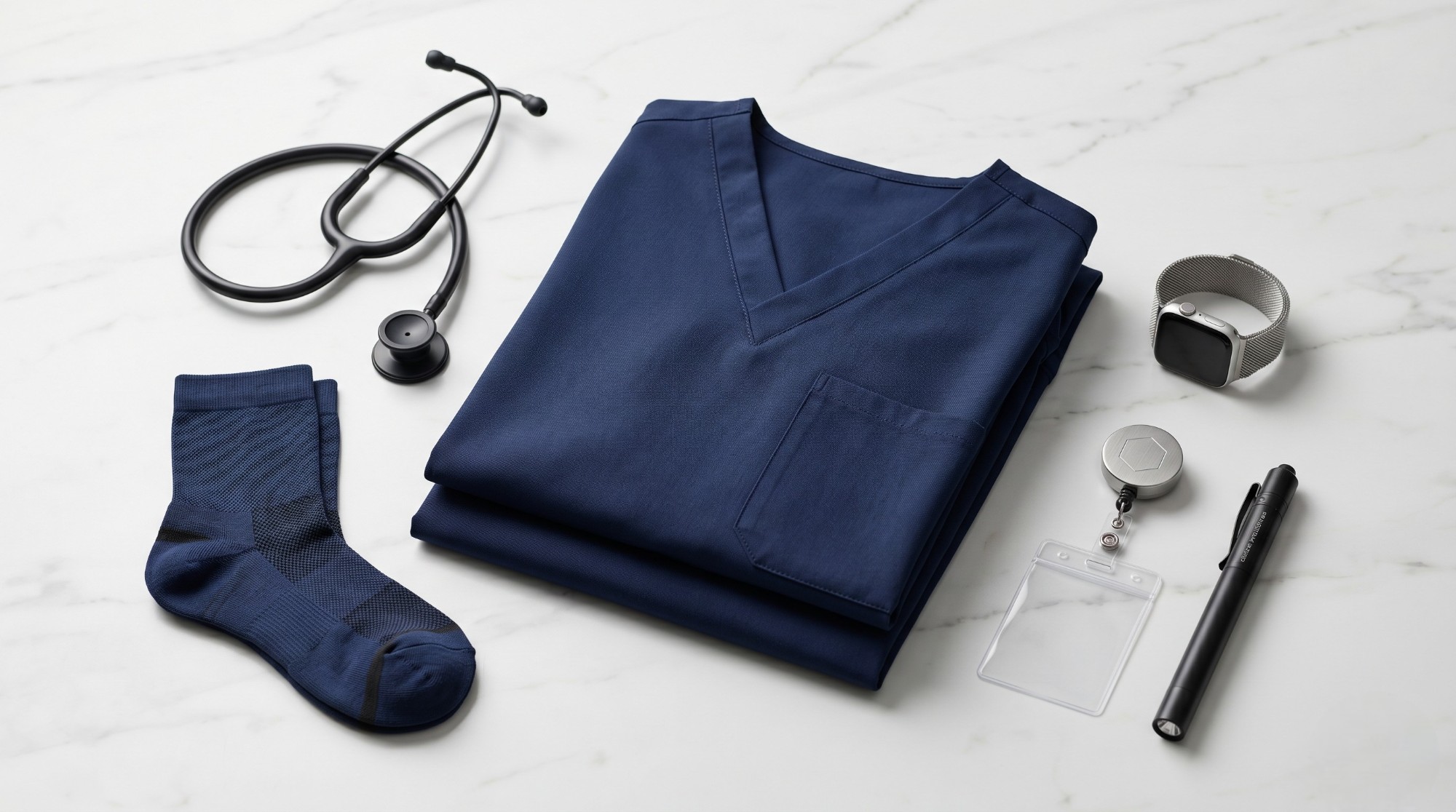
Thriving in the fast-paced healthcare environment requires more than just clinical expertise; it demands a wardrobe engineered for peak operational performance. While selecting premium uniforms is the crucial first step, integrating high-quality medical accessories transforms standard attire into a fully optimized professional toolkit. These carefully curated additions bridge the gap between comfort, functionality, and immaculate presentation. For medical practitioners operating across Saudi Arabia, investing in the right auxiliary items ensures you remain resilient, prepared, and authoritative throughout the most demanding clinical rotations.
Badge Reels: Secure Your Identity with Style
Integrating retractable badge reels into your daily uniform ensures seamless access control while actively preventing cross-contamination risks. This functional addition keeps your identification highly visible without hindering your complex clinical movements across the hospital floors.
- Ergonomic Extension: High-tension cords allow practitioners to swipe electronic access cards instantly without bending or removing the badge from the uniform.
- Secure Attachment Mechanisms: Heavy-duty alligator clips and carabiner backings guarantee the reel stays firmly anchored to the collar or chest pocket, preventing accidental loss during rigorous activities.
- Hygiene Maintenance: Smooth, non-porous plastic and metal housings facilitate rapid sanitization with standard antibacterial wipes between patient consultations.
- Professional Personalization: Sleek, minimalist designs maintain corporate compliance while subtly expressing individual clinical specialties or departmental affiliations.
Stethoscope Accessories: Protect Your Crucial Tool
Upgrading your diagnostic instruments with dedicated stethoscope accessories significantly prolongs their functional lifespan while defending against harsh environmental damage. These protective enhancements maintain optimal acoustic performance during intense emergency room rotations and critical patient assessments.
- Silicone Tubing Covers: Shield the sensitive acoustic pathways from degrading skin oils and repetitive friction, preventing the rubber from stiffening or cracking over time.
- Identification Tags: Precision-engraved metal or heavy-duty plastic markers eliminate equipment confusion in bustling clinical settings, ensuring your vital tools remain in your possession.
- Hip Clips: Relieve cervical spine pressure by transferring the weight of the instrument from your neck to your waistband, drastically reducing cumulative physical fatigue.
- Acoustic Seals: Specialized replacement eartips provide a superior auditory blockade against ambient hospital noise, securing maximum diagnostic clarity.
| Accessory Type | Primary Clinical Advantage | Longevity Benefit |
| Tubing Covers | Prevents lipid-induced rubber degradation | Extends the baseline structural integrity by years |
| Hip Clips | Eliminates dangerous neck draping | Protects the binaural spring tension from warping |
| ID Tags | Establishes absolute ownership | Reduces the financial burden of replacing lost units |
Compression Socks: Invisible Support for Long Shifts
Wearing medical-grade compression socks is a non-negotiable strategy for vascular health, effectively combatting the profound physical toll of continuous standing. Combining these garments with highly comfortable medical shoes creates the ultimate foundation for enduring exhaustive schedules.
- Enhance Venous Return: Graduated pressure mechanisms actively push deoxygenated blood upward from the lower extremities, maintaining optimal cardiovascular circulation.
- Reduce Edema Accumulation: Consistent tissue compression prevents extracellular fluid buildup, minimizing the painful swelling commonly experienced after twelve-hour shifts.
- Prevent Varicose Vein Development: Structural support fortifies weak vein valves, significantly mitigating the long-term occupational risks associated with stationary clinical work.
- Provide Arch Stabilization: Reinforced footbeds offer targeted plantar fascia support, absorbing micro-shocks on hard hospital tiles while preventing muscular cramping.
Pocket Organizers: Smart Space Management
Utilizing dedicated organizers transforms a chaotic uniform into a highly efficient mobile workstation, complementing the benefits of choosing the right medical scrub for long shifts. This strategic nursing gear categorizes clinical tools flawlessly, eliminating wasted seconds when rapid patient interventions are urgently required.
- Compartmentalized Architecture: Precision-stitched slots separate varying instruments—from forceps to highlighters—preventing them from tangling or puncturing the garment fabric.
- Leak-Proof Barriers: Water-resistant backing materials protect the underlying uniform from accidental ink spills or localized fluid exposure during chaotic procedures.
- Slim Profile Integration: Ergonomic dimensions ensure the insert slides seamlessly into standard cargo pockets without creating unsightly bulges or restricting femoral mobility.
- Antimicrobial Surfaces: Treated fabrics actively inhibit bacterial colonization, maintaining a sterile environment for tools transitioning between different patient care zones.
Utility Scissors and Pen Lights: The Ultimate Nursing Gear
No clinical setup is complete without trauma shears and reliable pen lights, which serve as the absolute cornerstone of immediate patient assessment. Having these robust medical accessories readily accessible elevates your emergency readiness and baseline diagnostic accuracy.
- Focused LED Illumination: Optic-grade bulbs deliver true-color rendering without blinding intensity, allowing for precise pupillary response tracking and deep oropharyngeal examinations.
- Titanium-Coated Blades: Industrial-strength utility scissors slice seamlessly through thick bandages, athletic tape, and restrictive clothing during critical trauma interventions.
- Blunt-Tip Safety: Engineered with atraumatic lower extremities, these shears glide smoothly over the epidermis without causing iatrogenic lacerations in fast-paced scenarios.
- Corrosion-Resistant Hardware: Surgical-grade stainless steel construction ensures both tools withstand constant exposure to harsh chemical sterilants without oxidizing.
| Essential Tool | Assessment / Intervention Role | Material Specification |
| Clinical Pen Light | Neurological baseline testing, oral cavity inspection | Aircraft-grade aluminum housing, push-button activation |
| Trauma Shears | Rapid clothing removal, custom dressing creation | Fluoride-coated steel, high-impact autoclavable handles |
Coordinating Your Look: Finalizing Your Professional Wardrobe
Achieving an immaculate appearance requires aligning your core garments with complementary details like high-quality printed head caps. When you systematically shop your daily scrubs, integrating these finishing touches projects unparalleled professionalism to patients and colleagues alike.
- Color Theory Application: Matching ancillary items to the dominant shade of your uniform fosters a cohesive, visually soothing aesthetic that builds immediate patient trust.
- Pattern Synchronization: Balancing solid-colored suits with subtly patterned accessories introduces approachable warmth without violating strict institutional dress codes.
- Fabric Consistency: Selecting add-ons crafted from moisture-wicking, breathable textiles guarantees your entire outfit functions synergistically under intense thermal conditions.
- Streamlined Silhouette: Avoiding bulky attachments ensures your completed ensemble remains aerodynamic, facilitating swift navigation through crowded corridors and tightly packed wards.
Frequently Asked Questions
How often should I realistically replace my compression socks?
To maintain their therapeutic efficacy, it is highly recommended to replace compression garments every three to six months. Over time, the elastane fibers degrade from repeated stretching and high-temperature laundering, compromising the precise pressure gradient required for optimal vascular support.
Are pocket organizers universally compatible with all uniform types?
Most premium organizers feature standardized dimensions engineered to fit effortlessly into the standard breast or lower cargo pockets of modern clinical wear. However, practitioners should always measure their specific pocket width before purchasing to guarantee a secure, flush fit that will not slide during movement.
What is the safest method to sanitize delicate stethoscope accessories?
Non-porous attachments, such as silicone covers and metal identity tags, should be rigorously wiped down using standard 70% isopropyl alcohol wipes between shifts. It is imperative to avoid submerging the acoustic tubing in liquids or exposing the components to extreme heat sterilization, which can warp the materials.
Which nursing gear is considered absolutely essential for a newly graduated practitioner?
A novice practitioner must prioritize immediate diagnostic and identification tools. A heavy-duty retractable badge reel, a pupil-gauge pen light, and a reliable pair of blunt-tip utility scissors form the foundational triad necessary for navigating daily ward responsibilities with confidence and autonomy.