العربية

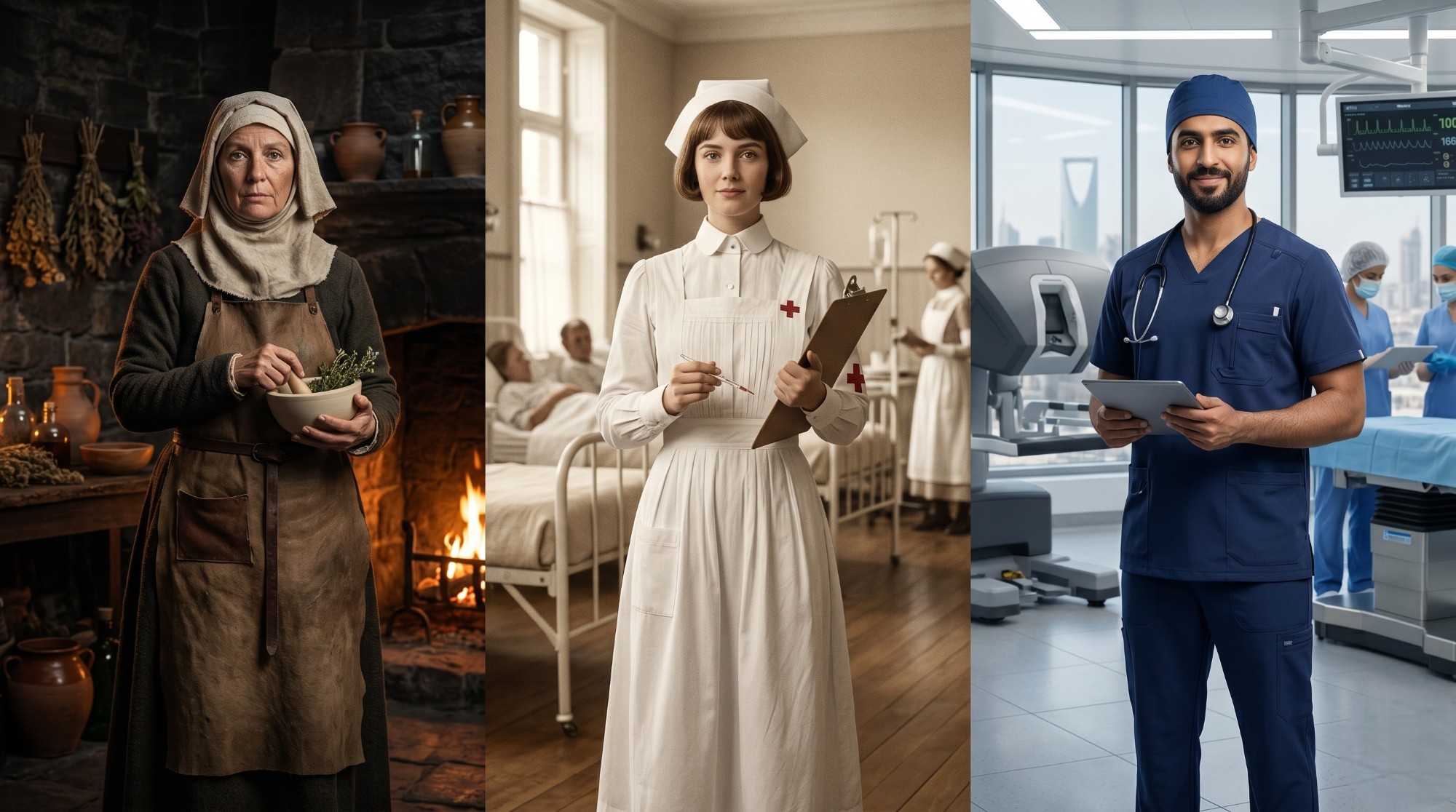
The history of the nursing uniform is a reflection of the evolving status of healthcare professionals and the changing nature of medical practice itself. From the austere, floor-length habits worn by 19th-century nurses to the sleek, ergonomic, and functional attire worn in modern hospitals, the journey of the medical uniform is a story of practicality, hygiene, and the professionalization of the nursing career. As healthcare standards improved, the attire of those on the front lines was forced to adapt, shifting from a focus on modesty and social status to a focus on mobility, sanitation, and clinical efficiency. Today, at Apex Scrubs, we recognize that this history culminates in the high-performance fabrics and tailored fits we see today—garments that do not just clothe the nurse but empower the medical professional to provide the best care possible.
The Origins: Florence Nightingale and the Birth of Professional Nursing
In the mid-19th century, nursing was not a formal profession, and those who provided care often wore their standard domestic clothes. This changed significantly during the Crimean War with the arrival of Florence Nightingale. Nightingale recognized that in the chaotic, often filthy conditions of war-time hospitals, a standardized approach to care—and by extension, dress—was essential.
While Nightingale did not introduce a “uniform” in the modern sense, she advocated for cleanliness and discipline. Her influence set the stage for nursing schools, which emerged in the late 1800s. These schools adopted distinct, dignified uniforms. These early garments were often modeled after the habits from which the nursing profession originated, characterized by long skirts, high necklines, and caps to keep hair off the face.
The Early 20th Century: The Era of White Aprons and Caps
By the early 1900s, nursing had become a recognized, respectable profession. The “White Uniform” became the iconic symbol of the nurse. During this era, white was chosen not just for its clinical aesthetic, but because it was believed to represent purity, cleanliness, and the ability to be bleached, which was vital for sanitation in pre-antibiotic hospitals.
Why was the Nurse’s Cap so Important?
For decades, the nurse’s cap was the ultimate status symbol of the profession.
- Symbolism: It signaled that the nurse had graduated from an accredited training school.
- Specialization: Different nursing schools designed unique caps, allowing patients and doctors to identify where a nurse had been trained at a glance.
- Psychological Impact: It reinforced the “Angel of Mercy” persona that society associated with nursing at the time.
However, as the mid-century approached, the limitations of these stiff, white, starch-heavy uniforms became apparent. They were difficult to clean, restricted movement, and were entirely impractical for the increasing complexity of hospital work.
Mid-20th Century: Practicality Begins to Take Hold
As we moved into the 1940s and 50s, the design of the nursing uniform underwent a slow, functional shift. The reality of hospital work—lifting patients, moving quickly between rooms, and spending 12 hours on one’s feet—meant that the heavy dresses of the past had to give way to something more manageable.
- Shorter Hemlines: Dresses were raised to calf-length or knee-length to allow for easier movement.
- Simplified Fabric: Synthetic fabrics began to replace heavy cottons, making uniforms easier to wash and less prone to wrinkling.
- The “Scrub” Emergence: The true revolution began in the operating room. Surgeons began moving away from street clothes and toward “operating room greens.” These garments were designed specifically for the OR: they were loose, comfortable, and could be easily sterilized.
The 1970s and 80s: The Rise of the “Scrubs” Revolution
By the 1970s and 80s, the traditional white nursing dress was rapidly becoming a relic of the past. The profession realized that if surgical staff were wearing comfortable, easy-to-clean scrubs, there was no reason nurses, technicians, and other healthcare workers shouldn’t benefit from the same level of comfort.
This era saw the “scrubs” transition from the operating room to the entire hospital floor. The unisex nature of scrubs was a massive step toward professional equality, replacing gendered associations with a uniform that prioritized function above all else. Today, we utilize high-performance fabrics that offer comfort and durability, such as our Dark Steel Blue Royal Polyester Scrub Top, which represents the pinnacle of this functional evolution.
Modern Healthcare: High-Tech, Ergonomic, and Diverse
Today, the medical uniform has reached the pinnacle of utility. Modern scrubs are designed to be as much about the human body’s comfort as they are about the medical procedure. We now focus on moisture-wicking fabrics, athletic fits, and storage solutions that ensure a professional is ready for anything.
Whether you are looking for Black Royal Polyester Scrub Pants for their professional look or the Dark Steel Blue Royal Polyester Scrub Pants for their range of motion, modern medical apparel has evolved to meet the demands of the 24/7 healthcare cycle.
Why Modern Scrubs Outperform Traditional Uniforms: A Comparison
The evolution from heavy, restrictive dresses to modern performance gear is not just a trend—it is a functional necessity for the modern medical climate.
| Feature | Vintage Nursing Uniform | Modern Performance Scrubs |
| Material | Heavy Cotton (Stiff) | High-Tech Synthetic Blends |
| Mobility | Extremely Restricted | Full Range of Motion (Stretch) |
| Infection Control | Difficult to sanitize thoroughly | Moisture-wicking, antimicrobial |
| Comfort | Low (Heavy, hot, chafing) | High (Breathable, lightweight) |
| Maintenance | Extensive ironing/starched | Wash-and-wear, wrinkle-resistant |
| Professionalism | Socially defined (White Dress) | Performance-defined (Tailored Fit) |
Conclusion: Honoring the Past, Empowering the Future
The history of the nursing uniform is a testament to the growth of healthcare. By moving from restrictive, traditional dress toward the high-performance medical apparel we use today, the profession has shown a commitment to evolving alongside the needs of patients. Modern scrubs are the ultimate tool for the modern professional, offering the comfort, hygiene, and mobility required to provide world-class care. As you go about your shift, remember that your uniform is the result of over a century of innovation—an evolution designed specifically to help you succeed in your vital work.
Frequently Asked Questions (FAQs)
1. Why did nurses switch from dresses to scrubs?
The switch was primarily driven by the need for hygiene, infection control, and mobility. Traditional dresses were heavy, difficult to wash, and restricted movement.
2. When did scrubs become the standard for all healthcare staff?
The widespread adoption of scrubs for all nursing staff happened throughout the 1970s and 1980s as the profession shifted its focus to practicality and cross-departmental standardization.
3. Was the nurse's cap ever mandatory?
Yes, for most of the 20th century, the cap was a mandatory part of the uniform for nursing students and graduates, serving as a symbol of their specific school and rank.
4. How do I keep my modern scrubs looking professional?
Modern scrubs require less maintenance than vintage uniforms, but you should still wash them in cold water with similar colors and tumble dry on low to preserve the integrity of the fabric’s stretch and color.
5. Why is the fabric used in scrubs so important now?
Today’s scrubs often use polyester and spandex blends to provide moisture-wicking and stretch. This helps keep you cool in high-stress environments and ensures that you can move easily without fabric fatigue.
6. Where can I find professional-grade, modern scrubs?
You can find a wide range of professional medical wear at the Apex Scrubs Shop, which combines modern athletic-fit technology with professional aesthetics suited for any clinic or hospital.
7. Does the color of my scrubs matter?
In many hospitals, colors are used to denote roles. Even if your workplace doesn’t have strict rules, choosing professional colors like Black Royal Polyester Scrub Top, navy, or steel blue is the safest way to maintain a polished look.